From small to big ideas: using RD&D to seed and grow the decarbonized building sector in California
This keynote will bring a government “portfolio view” of how research, development, and demonstration (RD&D) expands the sandbox of solutions, bridging everything from:
- Next-generation storage and resilient electrification for large industrial/institutional facilities
- Plug-and-play technologies that make residential upgrades easier and more accessible
- Practical models, guidebooks, and tools that help households electrify and reduce barriers
Short Bio:
Cammy Peterson is the Deputy Director of Energy Systems, Innovation, and Strategy at the California Energy Commission (CEC). Since joining the CEC in 2023, she has helped lead over $250 million annually in research and development programs supporting building decarbonization, energy storage, advanced grid technologies, and transportation electrification. She advances major funding initiatives including the Electric Program Investment Charge (EPIC) and Long-Duration Energy Storage programs. Prior to the CEC, she led clean energy initiatives at the Metropolitan Area Planning Council in Boston and held policy roles in Massachusetts and New York. She holds a Master’s degree from Tufts University and a Bachelor’s degree from Harvard University.
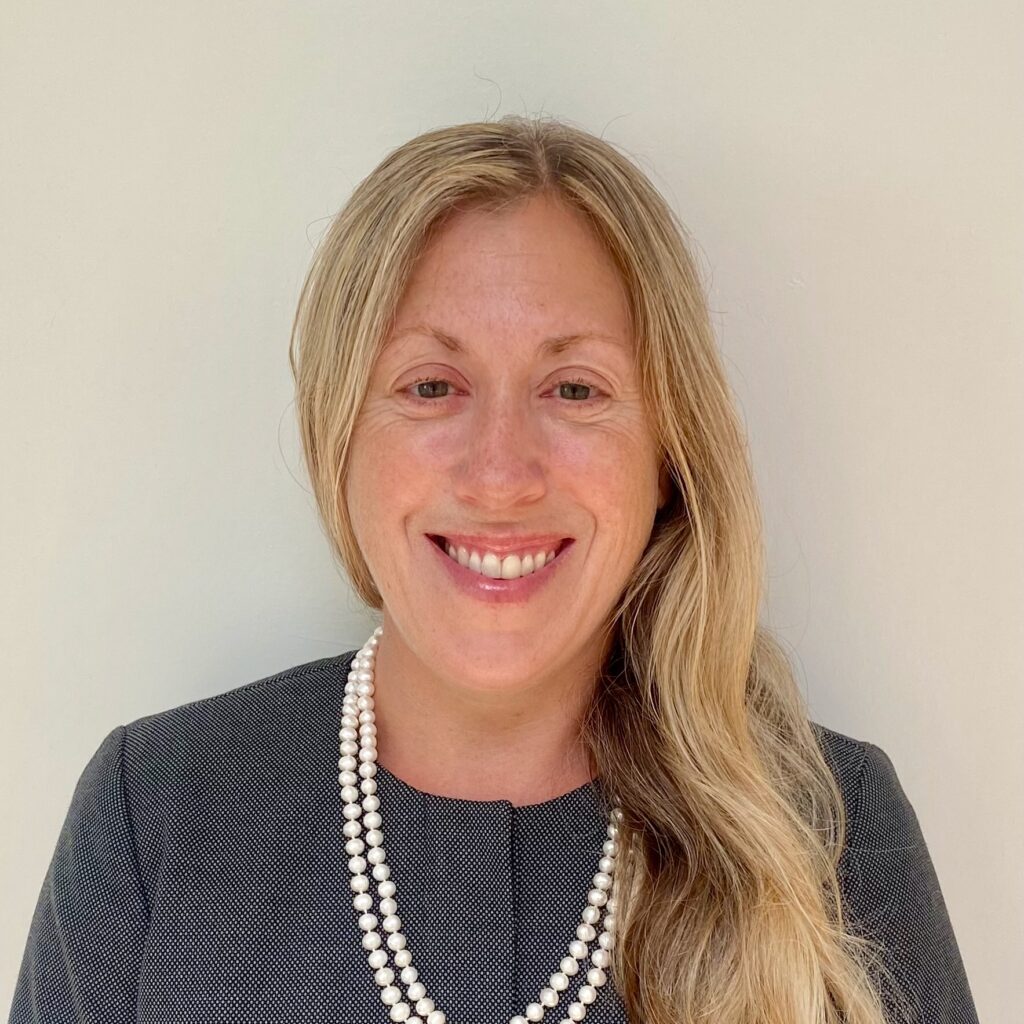
Cammy Peterson
Deputy Director of Energy Systems, Innovation, and Strategy
The California Energy Commission (CEC)
Cammy.Peterson@Energy.ca.gov
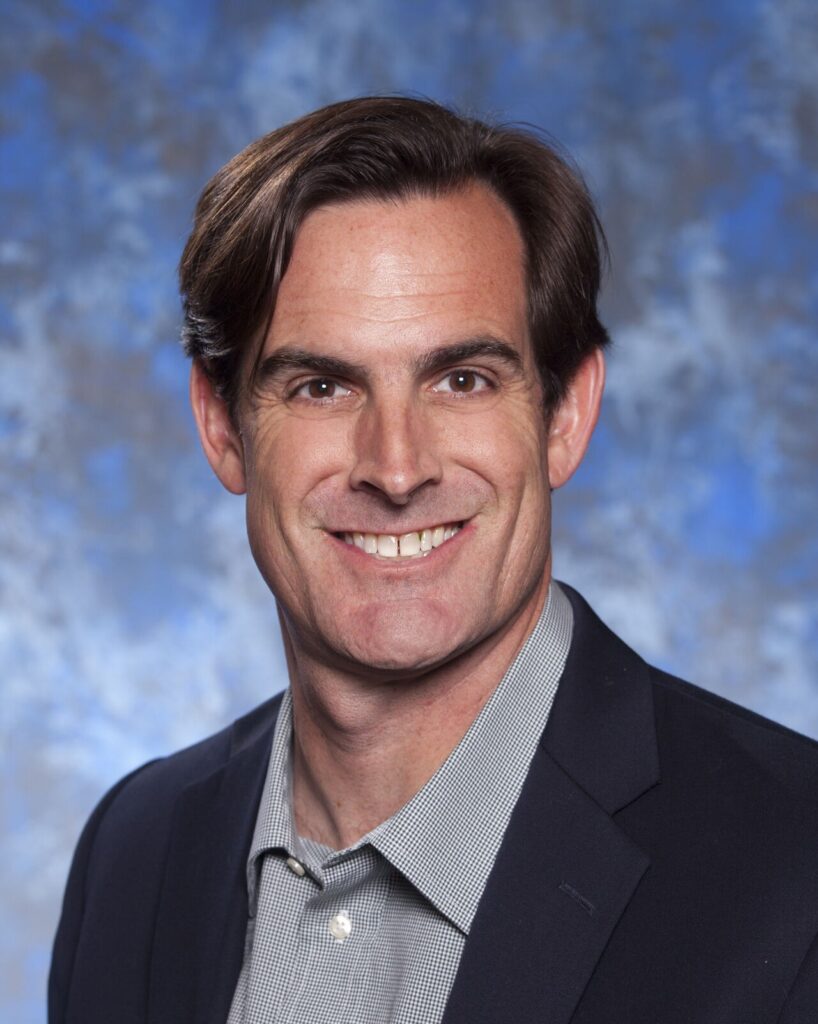
Travis R. English
Chief Design Engineer & Sr. Director of Engineering, Kaiser Permanente
Travis.R.English@kp.org
From Air Changes to Outcomes: Rethinking Healthcare Ventilation
Travis R. English will share why long-standing assumptions: some rooted in guidance from 50+ years ago, are being re-examined by new evidence. Multiple ASHRAE research efforts and real-world hospital measurements point to a counterintuitive insight: higher ventilation rates do not automatically improve indoor air quality.
So what’s next?
- Smarter air, not more air
- Performance-based design over checkbox compliance
- Infectious aerosol control + decarbonization as one mandate
- Lessons that helped shape ASHRAE Standard 241
Short Bio:
Travis R. English is the Chief Design Engineer and Senior Director of Engineering for Facilities Planning and Design at Kaiser Permanente. He leads the engineering standards team responsible for HVAC, electrical, plumbing, controls, energy, and water systems, and oversees design program requirements for engineered systems across Kaiser Permanente facilities. Since joining Kaiser Permanente in 2011, Travis has led research and development efforts in healthcare ventilation and energy performance. He has authored or co-authored more than 20 peer-reviewed publications and helped establish Kaiser Permanente’s award-winning commissioning program for new construction. He also serves on several ASHRAE committees advancing healthcare engineering standards.
Challenges for Occupant-Centric Control
Professor Kim will walk through a practical, research-grounded roadmap for OCC implementation, including:
- Human physiological models that connect environmental conditions to thermal comfort
- Vision-based AI frameworks that infer occupant state in real time
- Machine learning, data-driven HVAC control strategies that can satisfy multiple occupants simultaneously, even when comfort needs conflict
Short Bio:
Professor Taeyeon Kim is currently affiliated with the Department of Architecture & Architectural Engineering at Yonsei University in Seoul, South Korea. He received his bachelor’s and master’s degrees from Yonsei University and his Ph.D. from The University of Tokyo in Japan. Over the past 23 years, his research has focused on indoor air quality (IAQ), occupant-centric control (OCC), and zero-energy buildings (ZEB). Through a combination of experiments, simulations, and on-site evaluations, he has been dedicated to creating healthy and energy-efficient indoor environments.

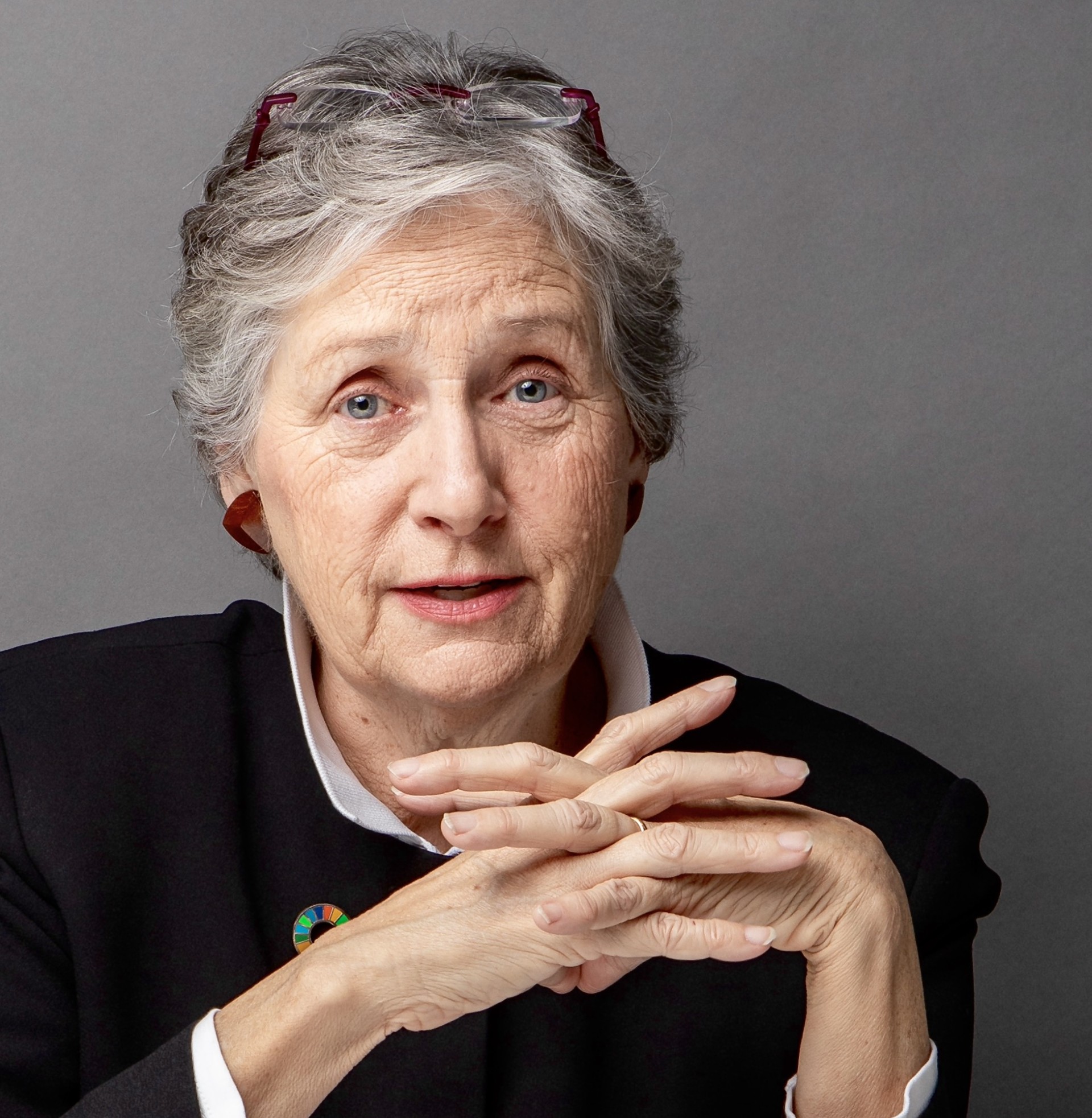
Focus on What Matters – Improving Ventilation for Health and Productivity
In collaboration with the US GSA, a leader in the Health in Buildings Roundtable (HiBR) promoting ‘Ventilation as a Public Health Strategy’, Carnegie Mellon’s CBPD has completed a multi-year research study on the importance of ventilation for health and productivity in the nation’s workplaces. This research applies advanced data analytic tools to years of captured building automation and indoor air CO2 data to demonstrate that improving outside air delivery (OA), through prioritized fault response and increased use of economizers, can improve indoor air quality (IAQ) for occupant health and productivity, without added energy costs, and even greater energy savings.
Short Bio:
Vivian Loftness, FAIA, is the Paul Mellon Chair and University Professor at Carnegie Mellon University and co-Director of the Center for Building Performance and Diagnostics. She is a renowned researcher, author, and educator with over forty years of experience in high-performance building research for practice, industry, and government. She has edited the 2013 and 2020 Springer Encyclopedia on Sustainable Built Environments and published extensively on environmental sustainability, advanced building systems integration, and performance-driven design. She is an elected Fellow of the American Institute of Architects, the U.S. Green Building Council, the New Buildings Institute, and the Design Futures Council. Her honors include recognition as one of the “13 Stars of Building Science” by the UK Building Research Establishment, along with multiple awards from AIA and NESEA. She holds a B.S. and M.Arch from MIT.
Redefining Energy-Efficient Buildings: Beyond the “One-Size-Fits-All” Paradigm
Dr. Khovalyg will highlight emerging evidence that challenges long-standing assumptions in comfort modeling and HVAC control:
- Thermoregulation varies significantly across and within individuals
- Comfort is often local and transient, not just whole-body and steady-state
- Fixed metabolic rates and “average occupant” models can misrepresent real comfort and strain
Short Bio:
Dr. Dolaana Khovalyg is a Professor at the École Polytechnique Fédérale de Lausanne (EPFL) and the founding head of the Laboratory of Integrated Comfort Engineering (ICE). Her research integrates building physics, thermal engineering, and human physiology to advance human-centric indoor environments. Her work challenges the long-standing “one-size-fits-all” paradigm of climate control, advocating instead for personalized thermal environments and occupant-centric system design. She also contributes to IEA EBC Annex 87 and has received several recognitions, including the Best Paper Award at the International Building Physics Conference (IBPC 2021).

Dolaana Khovalyg
Professor, The École Polytechnique Fédérale de Lausanne (EPFL)
dolaana.khovalyg@epfl.ch

Grant Anderson, P.E.
Co-Founder of Paragon Space Development Corporation
Vice Chair, Arizona Space Commission
grantanderson@stanfordalumni.org
Spacecraft Environmental Control: Can I have more Oxygen, Please?
Mr. Anderson brings decades of experience leading systems and conceptual design for spacecraft and flight hardware under contracts with organizations such as Lockheed Martin, SpaceX, Boeing, NASA, and others, along with deep expertise shaped by real mission qualification and deployment.
If you care about ventilation, sensing, controls, resilience, and human-centered environmental design, this keynote will challenge assumptions, and spark new ideas that translate back to buildings on Earth.
Short Bio:
Mr. Anderson co-founded Paragon in 1993. Currently the Treasurer of Paragon, he has held diverse positions at Paragon including President & CEO, Chief Engineer, VP of Engineering, Secretary of the Board, CFO, Sr. VP of Operations, Chief Operating Officer and others. Mr. Anderson has led the systems and conceptual design of multiple human spacecraft and the design of the International Space Station Solar Arrays. He has been on multiple non-profit boards including schools, charity organizations and the Tucson Metro Chamber of Commerce.
